



16
Feb, 2025
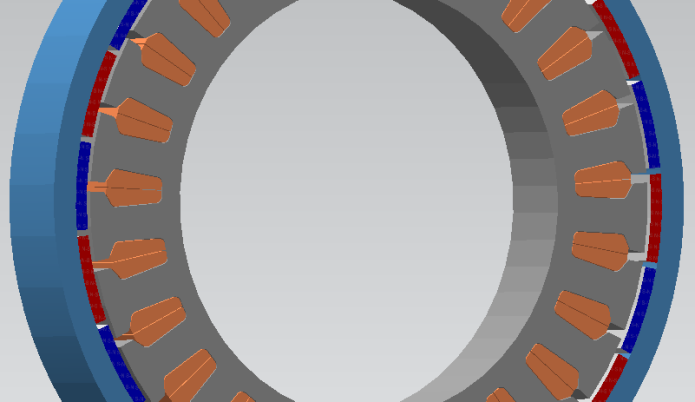
Rules to Optimize Five-Phase Permanent Magnet Synchronous Motor Laminations
Rakesh K Dhawan, Power Electronics Group LLC
Optimizing five-phase Permanent Magnet Synchronous Motor (PMSM) stator laminations is essential for achieving high efficiency, low weight, and superior performance. The five-phase configuration provides lower torque ripple, better fault tolerance, and smoother operation than traditional three-phase motors. Key design considerations include minimizing magnetic saturation, reducing flux leakage, and balancing lamination and copper weight...
Read More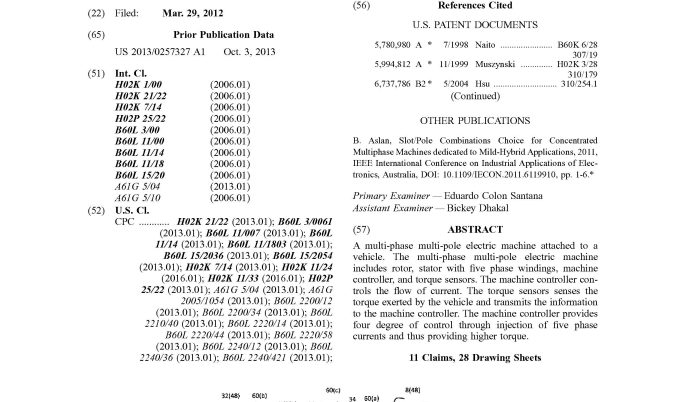
14
Feb, 2025
Five-Phase Permanent Magnet Motor Design
Rakesh K Dhawan, Power Electronics Group LLC
A five-phase permanent magnet (PM) motor is an advanced electric motor configuration that offers superior performance to traditional three-phase motors. These motors are used in applications requiring higher torque density, smoother operation, and greater fault tolerance. Below is a patent for a typical five phase motor with 25-slots and 22-magnets. 1. Advantages of a Five-Phase PM Motor Higher Torque Density Five-phase ...
Read More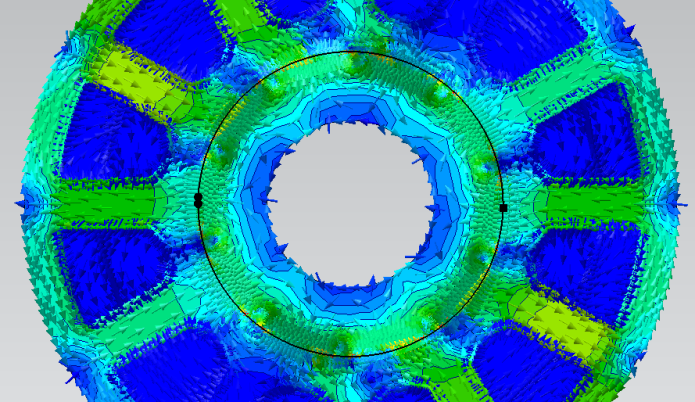
01
Feb, 2025
Flux Density Distribution Plots
Rakesh K Dhawan, Power Electronics Group LLC
The principles behind the operation of electric motors are a tremendous gift of nature. Uncovering those principles and focusing on their precise and accurate applications makes for an elegant and beautifully designed electric motor. I love the electric motor design, and today, I wanted to share this beautiful plot of the flux density distribution of a new IPM motor. IPM Motor with Flux Density Contours There’s something al...
Read More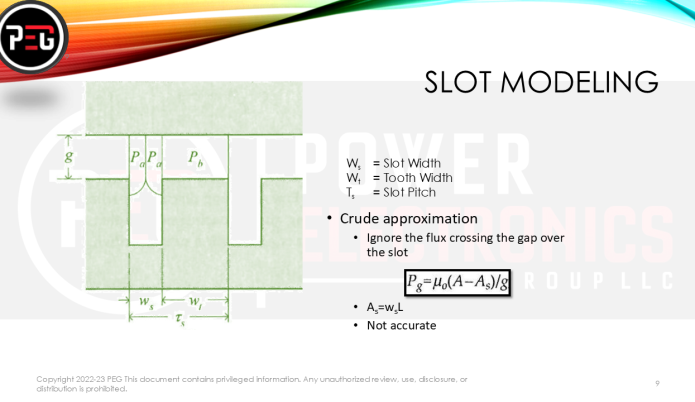
28
Jun, 2023
How will you use the 80/20 Principle in Hardware Design
Rakesh K Dhawan, Power Electronics Group LLC
The 80/20 principle, also known as the Pareto Principle, suggests that roughly 80% of the effects come from 20% of the causes. When it comes to hardware design, applying the 80/20 principle can help optimize efficiency and focus resources on the most critical aspects. Here are some ways to utilize the 80/20 principle in hardware design: Identify Critical Features: Determine the key functionalities and features for the hardware desi...
Read More25
Sep, 2022
POWER ELECTRONIC SIMULATIONS and PRODUCT DEVELOPMENT CYCLE
Rakesh K Dhawan, Power Electronics Group LLC
At PEG, we practice an integrative approach involving Simulation in the complete product development cycle. It is important to understand the role of simulation in every phase of the product development cycle. Below is a summary of how simulation can be used in each stage: 1. Concept Phase: During this phase, use simulation tools to verify circuit operation. One must start small using ideal component models and build ...
Read More